NEWS
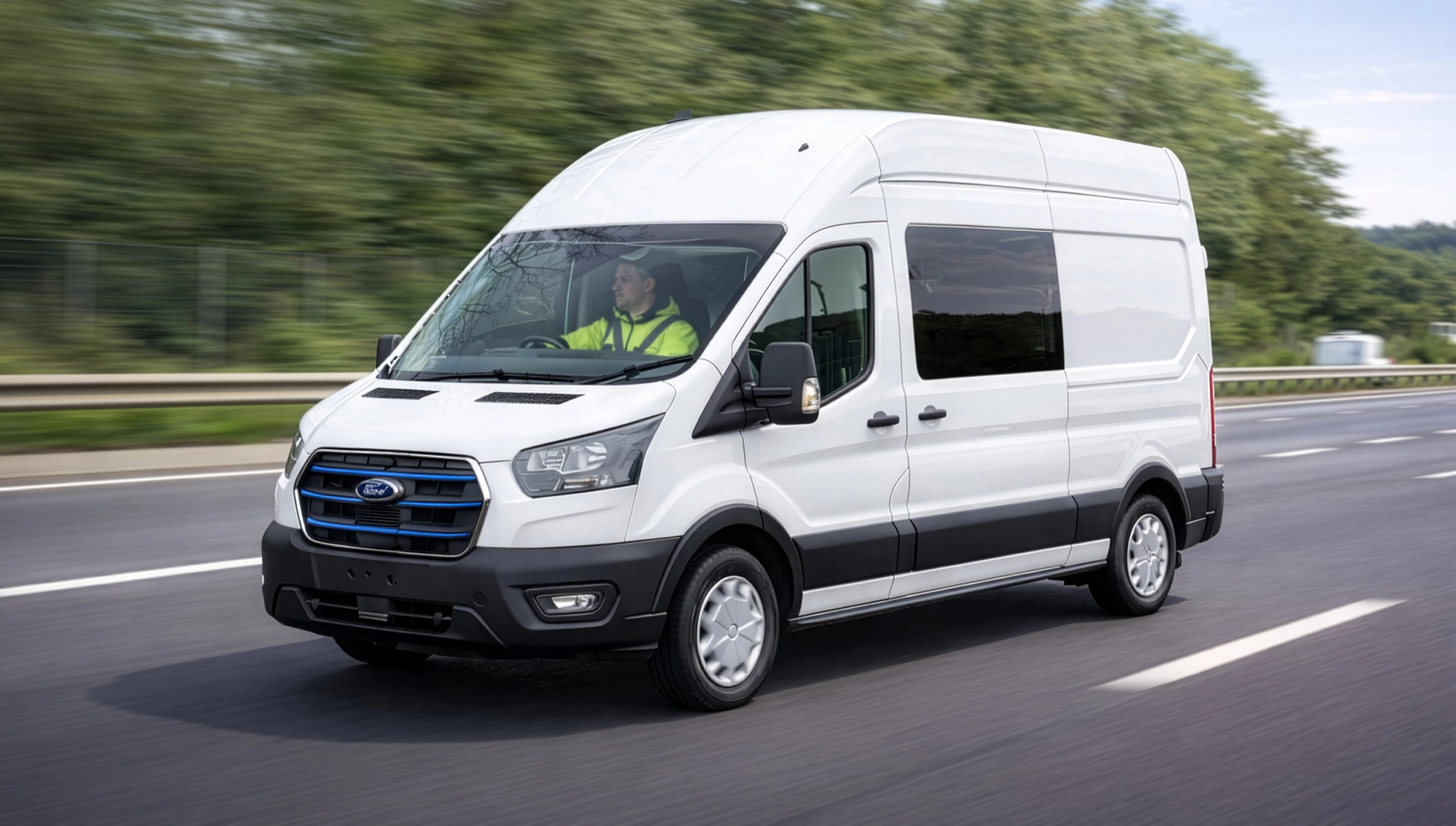

The welfare vehicle market is changing fast and we’re seeing it first-hand at Clarks Vehicle Conversions.
For years, diesel welfare vans were the default choice for fleets needing reliability, practicality and all‑day support for teams on site. But that conversation is shifting. Government policy, funding opportunities, sustainability targets and growing confidence in electric commercial vehicles have pushed electric welfare from “future thinking” to a genuine, operationally viable option.
That’s exactly why we developed our Clarks E-Welfare
Fleet buyers don’t need vague statements about electrification. They need practical engineering, real data and a vehicle that performs in real working conditions.
That’s what we’ve focused on delivering - a fully electric welfare solution built for everyday use, compliance and driver comfort.
We found that this level of welfare equipment usage drew 3.16kW from the vehicle battery over the day, equating to a reduction of just 4.43 miles of range.
One of the biggest questions around electric welfare vehicles is simple: how much battery range is lost by running the welfare equipment?
Rather than rely on assumptions, we tested it.
In our case study, The Revolutionary Ford E-Transit Welfare, we assessed a realistic working-day scenario including heated seats, mobile phone charging, handwash, microwave use, a water boiler, interior lighting, an external beacon and an external work light.
The results were clear.
Across a full working day, the welfare equipment drew 3.16kW from the vehicle’s battery. In real terms, that’s a reduction of only 4.43 miles of driving range.
This is a significant finding because it directly tackles one of the biggest objections to electric welfare vans:
“Will the welfare kit drain the battery and limit usable range?”
Our testing shows that, when engineered correctly, it won’t.
A well‑designed electric welfare vehicle remains a practical, operationally sound option — with welfare functions having only a minimal impact on overall range.
Our system also draws from the vehicle’s traction battery to power the 12v system, removing the need for a separate auxiliary battery.
From our testing, this delivers clear benefits: lower weight, improved reliability and reduced replacement costs. It also eliminates the need for additional power sources such as solar panels.
We also found that pre-conditioning auxiliary functions and heating while the vehicle is plugged in can reduce power demand at the start of the day, helping preserve charge and support battery cell life.
The direction of travel is clear. The UK’s Zero Emission Vehicle mandate is steadily increasing the proportion of new van sales that must be zero emission, rising to 24% in 2026, 70% by 2030 and 100% by 2035. Government has also reaffirmed that all new cars and vans must be fully zero emission by 2035.
For fleet operators in utilities, highways, rail, civils, construction and the public sector, this shift matters now.
Procurement decisions are increasingly shaped by environmental targets, compliance expectations, customer pressure and long‑term running costs. Organisations don’t need to replace everything overnight — but they do need to start planning for a more electric future.
From our perspective, that’s one of the key reasons electric welfare vehicles deserve serious attention today.
Early adopters have the advantage: they can understand how the technology fits their operation, trial it properly and build confidence internally — rather than facing rushed decisions later as legislation tightens.
When it comes to electric welfare vehicles, the base vehicle really matters.
We developed our electric welfare conversion around the Ford E-Transit, creating a vehicle that is also N2 Type Approved. That gives customers added confidence in the compliance, engineering and real-world suitability of the finished vehicle.
The Ford E-Transit is also listed by GOV.UK among eligible vehicles for the plug-in van grant in relevant large-van variants. For buyers, that adds further confidence that this is a serious commercial platform with clear market backing.
A major part of what makes this offering so compelling is our position within Ford’s One Stop Shop programme.
Ford describes One Stop Shop vehicles as ready-to-use converted vehicles that combine the right base vehicle with specialist conversion expertise, while making warranty, finance and maintenance support available across the complete vehicle and conversion. The aim is to simplify the buying process and provide a more joined-up ownership experience.
That matters because fleet customers do not want unnecessary complexity. They want a vehicle that is ready to work, supplied through a straightforward route, and supported properly after delivery.
At Clarks, we believe that joined-up approach is especially valuable in the electric market. Customers exploring an electric welfare vehicle want clarity and confidence, and our Ford One Stop Shop welfare offering is designed to provide both.
The financial case for electric welfare vehicles is becoming stronger too.
The UK government confirmed that the plug-in van grant has been extended to at least 2027. Eligible vans can receive a 35% discount, with up to £2,500 for small vans and £5,000 for large vans, applied through the seller. The Ford E-Transit is included on the GOV.UK eligibility list for large vans.
Government has also cited industry figures suggesting that businesses switching to electric could save more than £2,800 a year on fuel alone.
When you combine grant support with lower running-cost potential and the wider market shift towards zero-emission vehicles, there is a clear case for fleets to start taking electric welfare seriously.
At Clarks, we do not see electric welfare as a trend-led gimmick. We see it as an important part of where the market is heading.
We know customers still want reassurance. They want to understand vehicle performance, welfare power usage, available support and whether an electric welfare vehicle is right for their operation. That is why we have focused on delivering a solution backed by testing, compliance and practical usability.
Our Ford E-Transit welfare vehicle is built to give customers that confidence.
If your business is reviewing the future of its welfare fleet, now is the right time to look closely at what electric can offer. You can explore the full detail in our case study, The Revolutionary Ford E-Transit Welfare, or get in touch with our team to discuss your requirements.
At Clarks Vehicle Conversions, we believe the future of welfare is something to prepare for now - and we are ready to help you do exactly that.
To find out more about our Clark Ford E-Transit Welfare Vehicle offering, contact sales@cvcltd.co.uk or call 01302 784 490